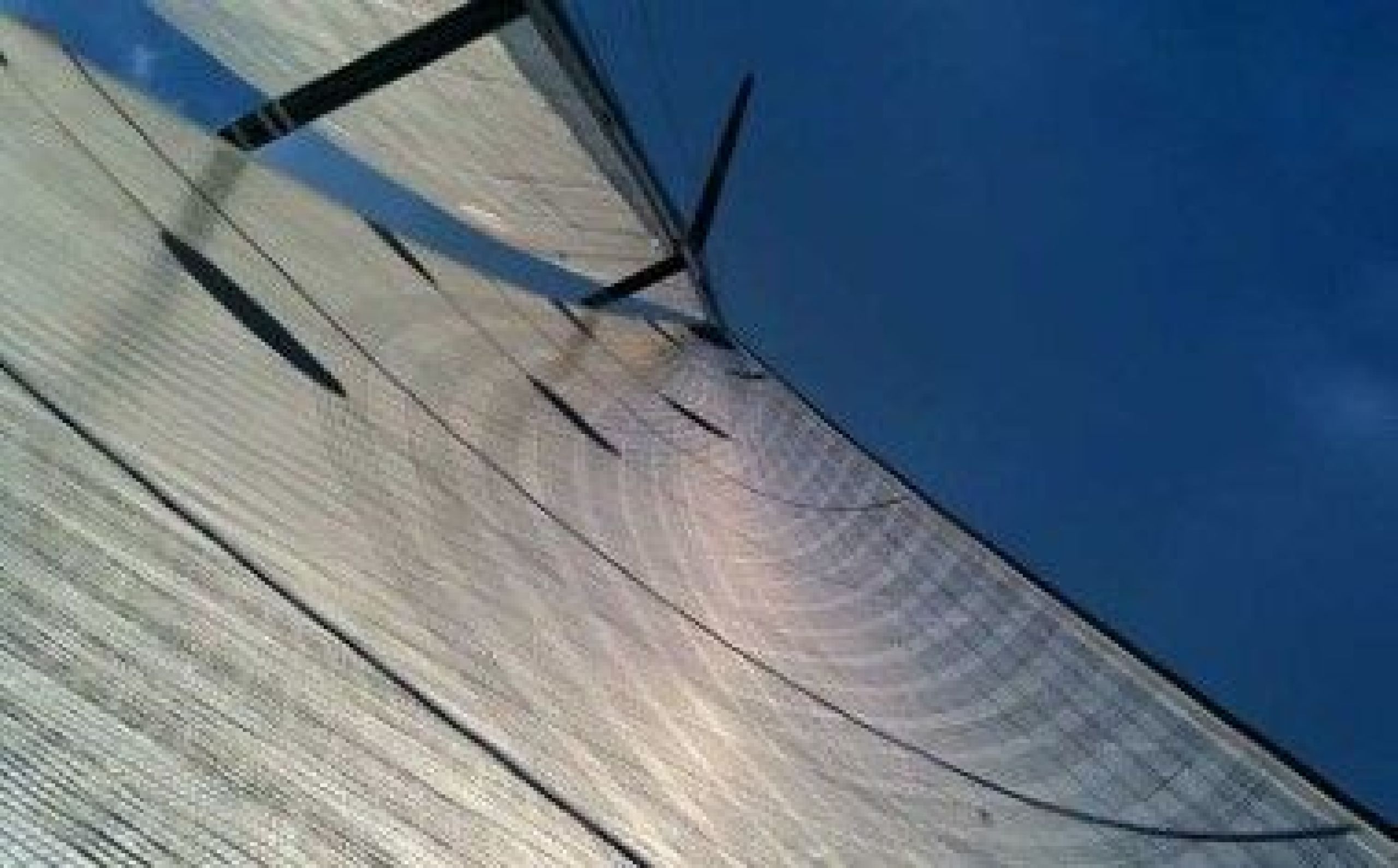
Sail Controls & Sail Trim
In this article on the basic sail controls and sail trim, I will explain how to use the basic sail controls available on all boats to set your sail trim. These sail controls should be adjusted whilst sailing your boat, each time you change the course sailed.
We will discuss the use of the following basic sail controls; kicking strap, outhaul, downhaul and sail trim.
Kicking Strap (Kicker) or Vang
The kicking strap pulls the boom down to apply tension onto the leech of the sail. A vang does the same, but uses a mechanical arm instead of a rope and block system.
Kicking Strap Upwind
|
Kicking Strap Downwind
|
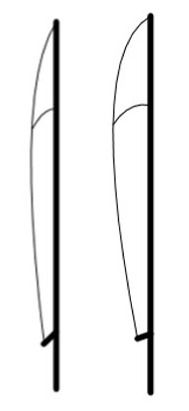 When sailing upwind, if the kicking strap is loose, the leech is allowed to curl off and the sail will be fuller. When the kicking strap is tight, the leech is held straight and the sail if flattened.
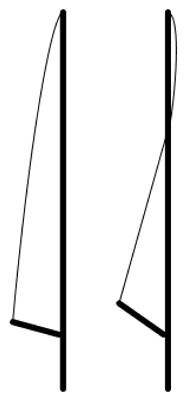 When sailing downwind, if the kicking strap is too loose the top of the sail will blow in front of the mast – sometimes this is helpful however it may cause the boat to become unstable and may lead to a capsize to windward.
Outhaul
The outhaul attaches to the clew and pulls the sail along the boom changing the shape of predominantly the lower third of the sail.
Outhaul Loose
|
Outhaul Tight
|
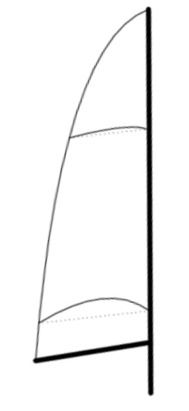 If the outhaul is loose the bottom third of the sail will be fuller.
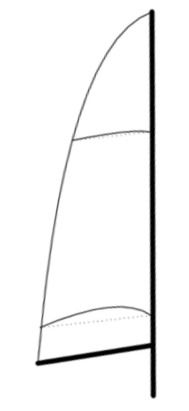 If the outhaul is tight the bottom third of the sail will be flattened.
Downhaul
The downhaul tensions the luff of the sail and changes the shape of the front part of the sail attached to the mast.
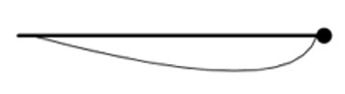
Downhaul Loose
If the downhaul is loose, the front portion of the sail is fuller. |
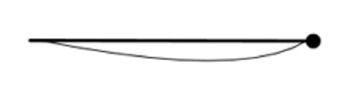
Downhaul Tight
If the downhaul is tight, the front portion of the sail is flattened. |
Sail Trim
Using the sail controls discussed above the sail shape can be altered to suit the wind conditions. This changes the airflow over the sail, the driving force or power of the sail and the amount of drag or resistance to movement which the boat feels.
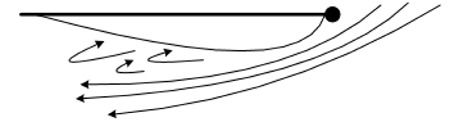
The following diagrams show the air flow over a sail when it is flattened off and when it is a lot fuller.
Flat Sail
With a flat sail the air flow is smooth and the sail is working efficiently.
|
Full Sail
While the fuller sail will provide more power the eddies over the aft part of the sail will cause drag, the wind is pulled along. If the wind were stronger the eddies would disappear and the sail would become more efficient, providing more power than the first example. It would however make the boat more difficult to hold upright and would not sail as close to the wind on a beat.
|
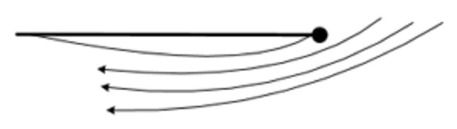
Upwind the sail needs to be flat enough to allow the boat to point well but not too flat that there is no power. Downwind the sail needs to be full enough to develop plenty of power but not too full that the eddies discussed above slow the boat down.