Racing With A Gennaker
Modern racing dinghies all use asymmetric spinnakers or gennakers providing thrilling high speed reach-to-reach racing on the downwind leg using the apparent wind. Unlike symetrical spinnakers, the gennaker has its clew attached to a continuous sheet while the tack is attached to a pole that is pulled out from the bow when the gennaker is hoisted & retracted when the gennaker is dropped.
What a gennaker does best
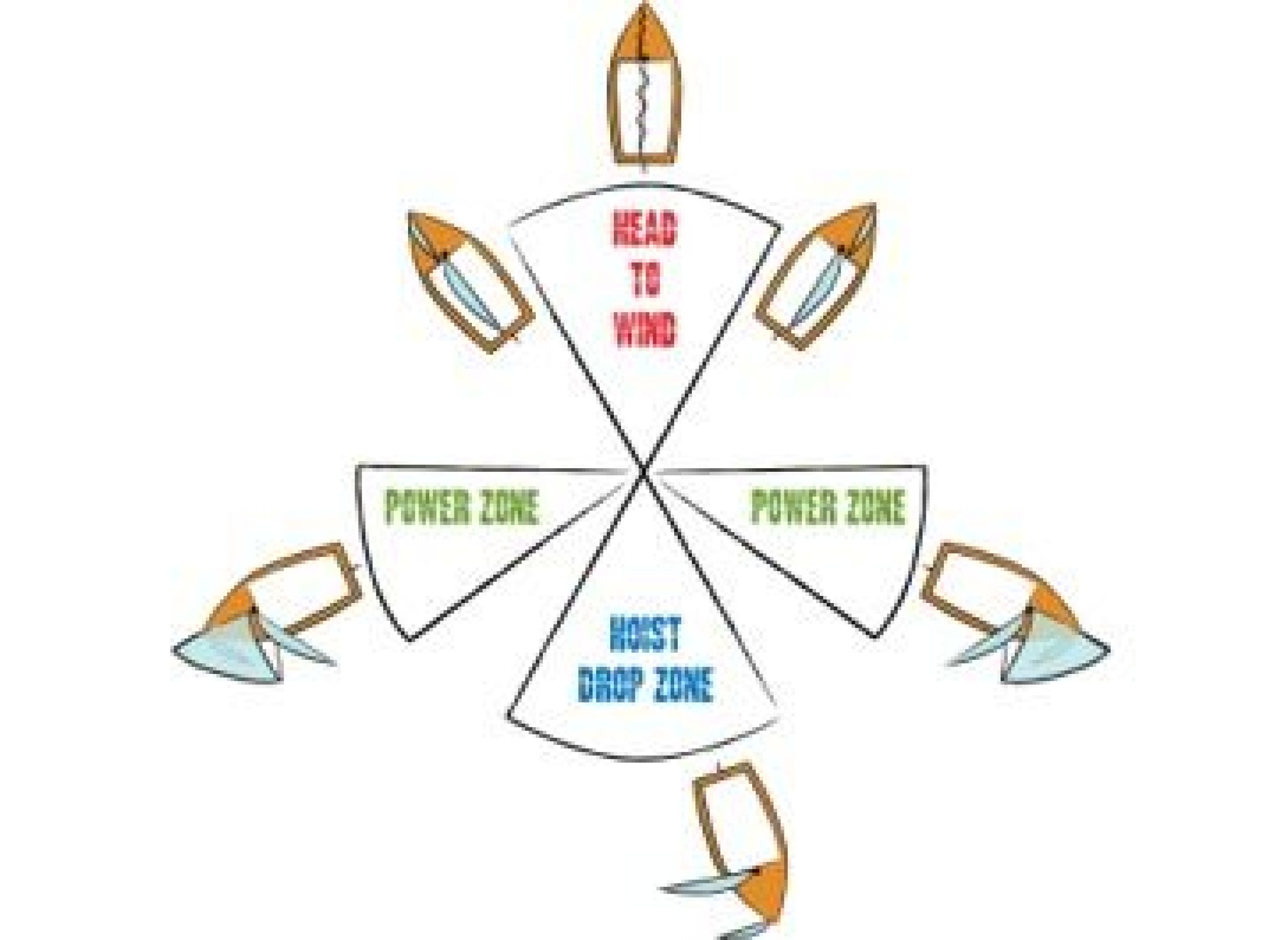
A gennaker provides maximum VMG (Velocity Made Good) toward the leeward mark sailing on the apparent wind by gybing from reach to reach downwind. Once hoisted, head up towards the wind to build power, then as the boat starts to heel, bear away and sail as deep as possible downwind, the stronger the wind, the deeper you can sail. The helm balances the boat by bearing away if it heels to leeward & heading up if it heels to windward. Using a gennaker on a tight reach is risky, if a gust hits you will need to bear away & may not be able to sail high enough to the mark, this is compounded if you need to bear away to drop the gennaker. A big windward leeward course on open water is best for a gennaker to show its pace.
Fragile handle with care
Gennakers are made from rip stop nylon, tape all pins, rings & shackles to prevent them ripping the sail. If the gennaker jams when dropping, don’t use force as you will probably rip the sail, partially re-hoist & then drop. Use spinnaker tape to repair small tears to prevent them getting bigger, ensure the sail is clean & dry before repairing.
Ready for the hoist
Before you reach the the mark, pull through any slack in the leeward gennaker sheet. The helm needs to focus on keeping the boat flat around the windward mark by easing out the mainsheet and moving weight back to keep the bow up. Unless the wind is light, bear away deep ensuring the gennaker will be blanketed by the main sail before hoisting. The crew assumes a wide legged stance & hoists hand over hand as fast as possible then grabs the sheet & hikes hard while the helm heads up to power up the sail. Ensure the sail is all the way up, if not it will be less effective & difficult to control. If the gennaker is twisted, try a gybe to pull it straight.
Powering up for optimum VMG
Sailing downwind as fast as possible requires finding the best course, not too high and far or too low and slow. Unless the wind is too light to make use of apparent wind, head up to power up, then bear away & accelerate on the apparent wind to produce optimum VMG. Keep your boat flat, bear away when it heels to leeward & head up to bring back the power when it heels to windward or slows down. Keep chasing the apparent wind, you never sail straight with a gennaker, follow a series of bends to match the breeze.
Who does what
Helm
- Steer & keep the boat flat, try to steer to follow the gennaker.
- Watch for gusts & assess when to gybe on a lifting breeze.
- Look for traffic & right of way issues, particularly in your blind spot to leeward.
Crew
- Trim the gennaker – look at the top half of the luff, aim to keep a slight inward curl for maximum power delivery.
Gybing a gennaker
It is effortless to keep gybing with little loss of speed either to pickup a wind shift or to clear another boats dirty air. The sheet is the only control operated through the gybe allowing for a fast transition from fully powered on one gybe to fully powered on the other gybe. Keep the boat sailing fast to minimise apparent wind through the gybe. Keep the boat upright through the gybe, bear away deep in strong winds.
Ready to drop
A gennaker drop should take no more than 15 second but a perfectly executed predictable drop takes practise.
Helm
- Bear away & blanket the gennaker with the main sail.
- On the final approach, go in wide & come out tight.
- Ensure the windward leg starts from the optimum windward position.
Crew
- As you come into the boat, stand on the gennaker sheet while you pull in any slack on the downhaul.
- Uncleat & pull in the downhaul hand over hand asap. If it jams, check the cleat or that you are not standing on the halyard.
Top tips dropping a gennaker
- Bear away deep to blanket the gennaker behind the main sail.
- Take up slack before starting to drop the gennaker.
- Pull in retrieval line as fast as you can.
- Ensure the halyard can run free & cannot jam.
- If you still have a problem, hoist & try to drop again.