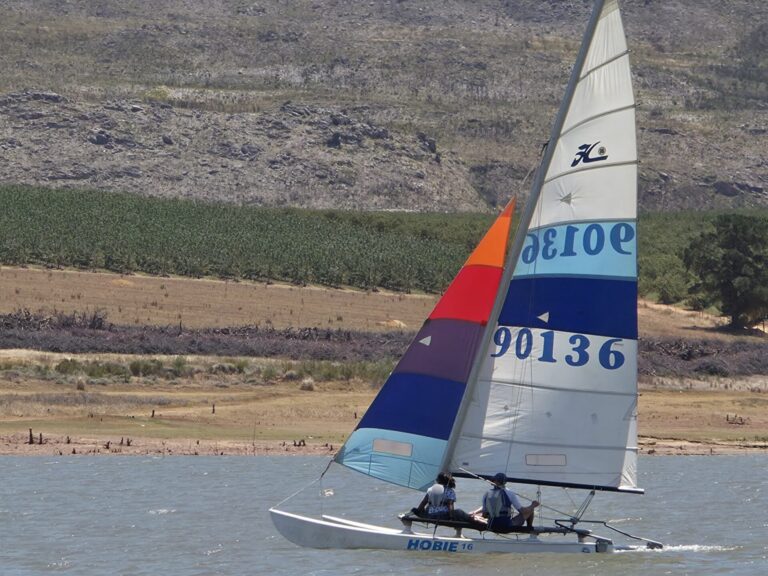
Sailing The Windward Beat Fast
Short answer: On the first beat, speed and clear air matter more than anything. Settle into your best upwind groove straight off the start line, stay out of other boats’ wind shadows, change gears as the wind and waves change, steer with your weight and sails rather than the rudder, and make every tack count.
The windward beat is where races are set up. The boats around you are closest together on the first beat, so a small speed advantage there gains you more than anywhere else on the course. Getting your bow in front early gives you clear air and the freedom to play the shifts.
Find your groove
Upwind there’s a balance between pointing high and sailing fast. Pinch and you go slowly; foot off and you sail extra distance. Your aim is the combination that gets you upwind fastest. Use your pre-start tune-up to find it, then settle into that feel as soon as you leave the line.
Keep your air clear
Clean air beats a perfect course in dirty air, especially in light wind. Look ahead for clear lanes and get into one early. If you have to sail in another boat’s wind shadow for a while, add a little power: ease the sheets slightly, move your weight in and forward, and bear away a few degrees.
Use the fleet as your speedometer
Most dinghies have no instruments, so compare yourself with the boats around you. Are you pointing as high? Going as fast? If not, change one thing at a time, such as sail shape, kicker or crew position, and see if it helps. If a boat near you is quicker, look at its sail shape and how it’s trimmed, and copy it.
Keep changing gears
The wind and waves never stay the same, so neither should your trim. A cleated sheet in a changing breeze is slow. Choppy water near the start line and around marks usually needs a bit more power to punch through.
Steer with weight and sails
Every rudder movement adds drag. To head up, heel the boat slightly to leeward and trim the main. To bear away, flatten the boat and ease the main. Use the rudder as the fine control.
Make every tack count
Lose a boat length on each tack and you’ll soon be in the second row. Practise your tacks until they’re smooth in every wind strength. Here’s how to perfect your tacks and gybes.
Talk to each other
In a two-person boat, the crew should call gusts, waves, shifts and how you’re doing against nearby boats, so the helm can concentrate on steering. Agree before the race how much talking you both want.
Check for weed and water
Do a weed check on the foils and empty the boat before the start. Both slow you down more than you’d think.
FAQ
Is it better to point high or sail fast upwind?
Neither on its own. Find the balance that gets you upwind fastest; when in doubt, especially in waves or after the start, sail slightly freer for speed.
What should I do if I’m stuck in bad air?
Get out of it as soon as you can, usually by tacking. If you must stay for a while, add power: ease the sheets slightly, move your weight forward and bear away a little.
How do I know if I’m going fast upwind?
Compare your height and speed with the boats around you. Change one setting at a time and watch whether you gain or lose.
Want coaching on upwind speed? Join dinghy race training at Theewater or keelboat race training in False Bay.