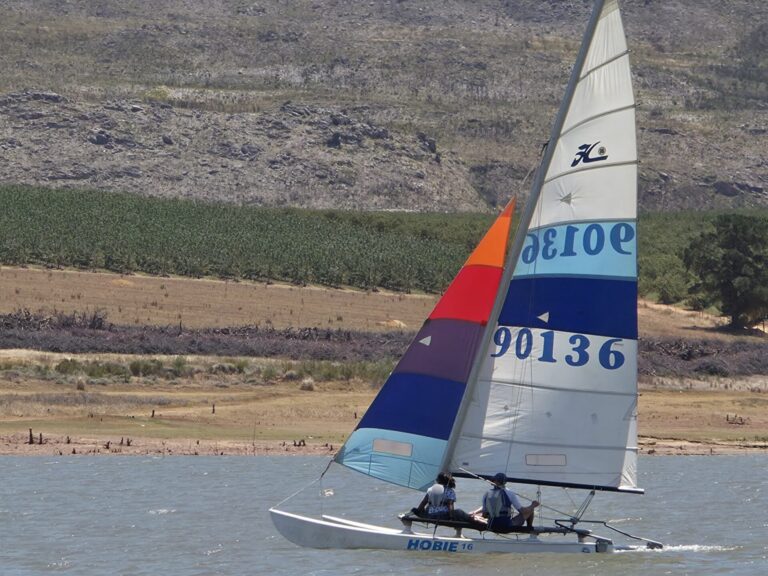
Recovering from a Poor Start
Short answer: Get into clear air as fast as you can. Usually that means tacking onto the opposite tack to the fleet straight after the gun and ducking behind boats until you find a clear lane. Then reassess your strategy. Right after the start the fleet is tightly packed, so you may be last but only a few boat lengths behind the leaders.
Recovering from a poor start is a skill every racer needs, because everyone has a bad start sometimes. The difference between a ruined race and a decent result is what you do in the first minute after the gun.
Why a bad start costs so much
Straight after the start the fleet is packed together. Every boat ahead of you is taking your wind, and boats to windward are pushing their wind shadow over you. Stay there and you lose distance every second, while the boats in clear air sail away.
1. Clear air comes first
Before you think about wind shifts or which side of the course is favoured, get out of the dirty air. A boat sailing a slightly worse course in clean wind will almost always beat a boat sailing the ideal course in someone’s wind shadow.
2. Get on the opposite tack to the fleet
Most of the fleet will be on starboard after the start. If you are stuck in the second row, tack onto port as soon as you can do it safely, and duck behind the starboard boats. Crossing behind them costs a little distance, but you are sailing in cleaner air and you stop losing ground to the whole fleet.
Don’t wait for the perfect gap. Boats ahead start tacking within seconds of the gun, and the longer you wait, the more likely someone tacks on top of you and closes your escape route.
3. Don’t hold out for your plan
It’s tempting to stay on starboard in bad air because you planned to go left. By the time the expected shift arrives, the boats that got clear air first are usually too far ahead. Get clear first, then work your way back to the side you wanted.
4. Reset and go fast
Once you’re in a clear lane, look around. Check the wind, check where the fleet is, and decide whether you’re on the right tack. Then focus on speed. Points are only collected at the finish, and a race has plenty of chances to catch up.
Better still: avoid the bad start
Most bad starts come from being late, being pushed over early, or having no gap to leeward. A routine you use every time fixes most of that. Here is our step-by-step starting routine.
FAQ
Should I tack immediately after a bad start?
Usually yes, if you can tack safely without fouling a starboard boat. Getting onto port in clearer air stops you losing distance to the whole fleet.
What if I can’t tack because of boats on my hip?
Sail fast, footing slightly for speed, and tack as soon as a gap opens. Watch for boats ahead tacking, which often creates space.
How do I avoid bad starts?
Use the same starting routine every time: check the line bias and transits, keep a gap to leeward, and be at full speed when the gun goes. See perfecting your dinghy starts.
Practise escapes from bad starts with a coach in Hobie race training or dinghy race training at Theewater.